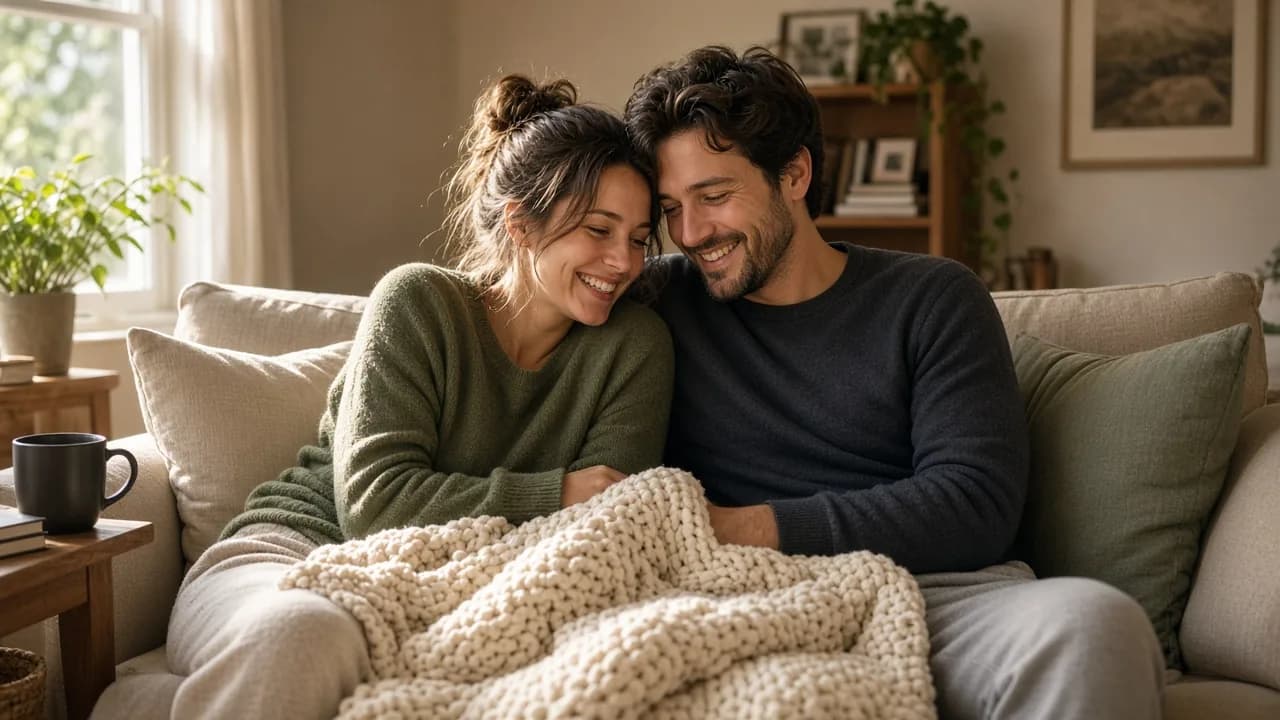
Sofa and blanket
Two people close together under a blanket is the most familiar version of this scene, warm and unposed.
Tip: Relaxed selfies with a natural expression fit this mood better than a formal smile.
Cozy home couple photos
Turn one portrait of each partner into a quiet scene at home: a blanket on the sofa, breakfast in the kitchen, a book by the window. The home is imagined, not your real living room.
2 free credits on signup · credits never expire

The pictures couples treasure are often not from big occasions. They are from ordinary days: sharing a blanket during a film, making breakfast without hurrying, reading in the same room. CoupleFrame's Cozy Home scene is designed for that kind of image. You upload one clear selfie of each partner, choose the scene, and receive an AI-generated picture of the two of you relaxing at home. The selfies can be taken separately, even in different countries.
This page focuses on everyday, lived-in moments rather than holidays or celebrations. There is no candlelit table or dressed-up outfit here; for a milestone, the anniversary ideas on the site are a closer match. Cozy Home leans on soft window light, comfortable clothes, and familiar details like mugs, cushions, plants, and books, with the couple at the center.
The home in the image is generated. It is not your apartment, and it will not reproduce your furniture or layout. The samples below are independent AI-generated images of fictional adults, showing the range of moods the scene can produce. Your draft may place you in a different room, light, or pose. Treat it as an imagined moment, especially if you live apart and miss ordinary days together.
Upload one clear selfie per partner, pick Cozy Home, and review the draft as an imagined day in.
A relaxed photo taken indoors by a window suits this scene. Make sure your face is fully visible and evenly lit, without sunglasses, heavy filters, or other people in the frame. The two selfies do not need to match.
Choose the Cozy Home scene in the studio. It sets a warm, lived-in interior direction. It does not recreate your own home, and you cannot pick a specific room, sofa, or activity.
Check both faces, hands, blankets, and cups at full size. Indoor scenes contain many small objects, so look for anything that feels off. Regenerate if needed, then unlock the higher-resolution version you want to keep.
Four separate examples show a shared blanket on the sofa, breakfast in the kitchen, reading by a window, and tea on a small balcony. Each uses a wide landscape frame with the couple centered and the room kept soft behind them.
These are original AI-generated examples of fictional adult couples, created from text prompts to illustrate the Cozy Home scene. They are not customer photos or real homes. A new result can differ in people, room, light, and composition.
Home can feel sleepy, busy, or calm. These descriptions refer to the samples above. You do not select them directly, but they can help you choose the draft that feels most like your own routine.
Two people close together under a blanket is the most familiar version of this scene, warm and unposed.
Tip: Relaxed selfies with a natural expression fit this mood better than a formal smile.
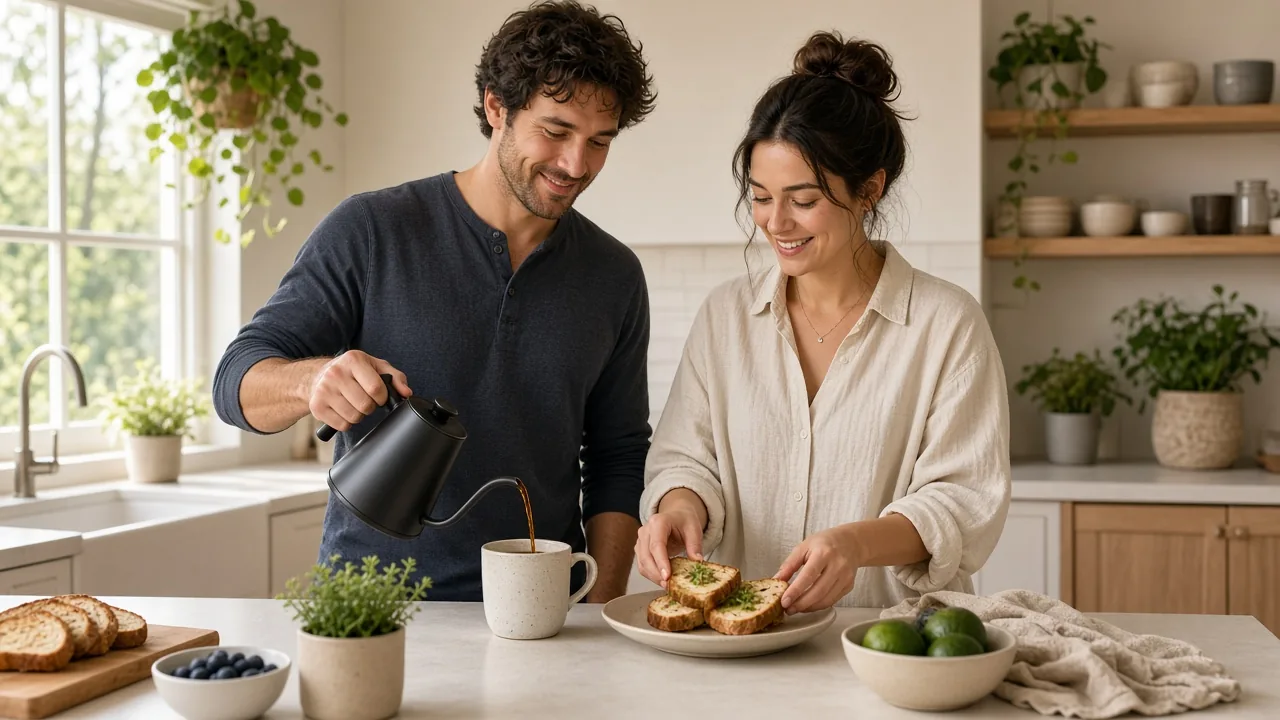
Coffee, toast, and two people moving around the same counter give the picture a sense of routine and teamwork.
Tip: Look closely at hands, mugs, and utensils; these small props are where generated detail most often goes wrong.
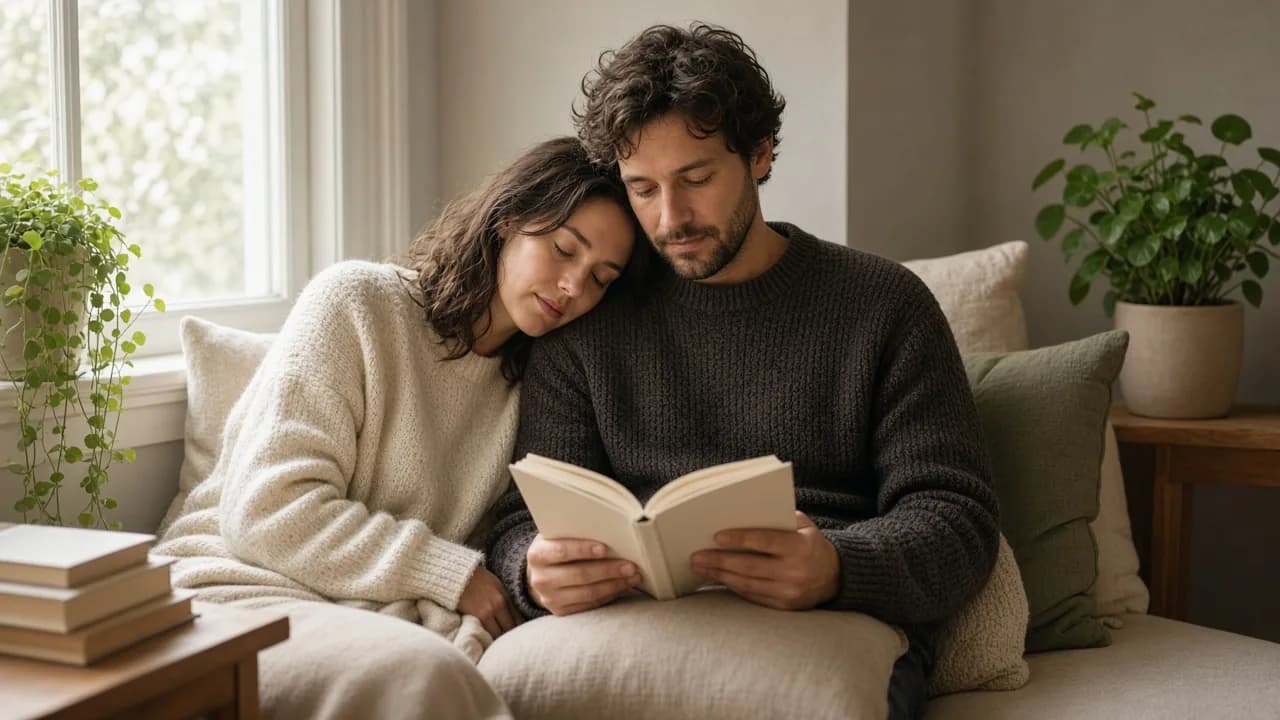
A quiet frame with books and daylight shows comfort without needing much action, ideal for couples who enjoy being together in silence.
Tip: Faces turned toward books can be partly hidden; regenerate if one of you is hard to recognize.
A small outdoor corner with plants and evening light extends the home scene without turning it into an outing.
Tip: Evening light is warmer, so compare skin tones with your selfies before keeping the image.
The appeal of a cozy home picture is that it looks like a normal day. What makes it personal is your choice of selfies and what the image stands for between the two of you.
Every couple has small rituals: who makes the coffee, where each person sits on the sofa, the shared blanket that never gets folded. You cannot tell the scene about those details, but you can use them to judge drafts. A result that resembles your real routine often means more than one that looks staged.
If you live apart, a home scene can represent the everyday life you are working toward. It is not the same as being together, and it does not show a real place, but it can be a gentle reminder of what you are planning.
Indoor scenes look best when the source photos share their soft light. A selfie taken facing a window at home, without flash, is a good start. Avoid harsh overhead lights, colored lamps, and strong filters, which can make faces look out of place once the scene re-lights them.
Comfortable expressions suit this scene. A photo where you look relaxed tends to blend better than a formal portrait. Use recent photos of similar quality for both partners so neither looks sharper than the other.
Couples use home scenes as phone wallpapers, in a shared album, or as a small surprise on an ordinary day. It works well next to more eventful scenes, like a café or a city night, to show the quieter side of a relationship.
For something formal, such as an announcement or a record of moving in together, real photographs are a better choice. A generated home is a creative image, not documentation of where you live.
Only upload a partner's selfie with their agreement, including for surprises. Before sharing, open the full-size image and look at faces, hands, blankets, and anything on tables or shelves. Regenerate if something looks wrong rather than editing around it.
If you post the picture, consider a brief note that it is AI-generated. A realistic living-room scene can easily be taken as a real photo, and some viewers may assume it shows where you live.
Both can show a couple relaxing indoors. One is an imagined scene built from two separate portraits; the other captures your own home and a real moment together.
CoupleFrame. An AI-generated image from one portrait per partner and the Cozy Home scene.
Photographer. Photos taken in your own home, on a timer, by a friend, or by a lifestyle photographer.
CoupleFrame. Not required. The selfies can be taken in different places and at different times.
Photographer. Both people are at home together when the photo is taken.
CoupleFrame. An imagined interior; your furniture, layout, and belongings are not reproduced.
Photographer. Your real home, with everything exactly as it is.
CoupleFrame. Choose the scene and regenerate drafts; the exact room, activity, and pose are not selectable.
Photographer. Choose the room, the light, the activity, and the moment.
CoupleFrame. A keepsake while apart, a gentle surprise, or a clearly labeled creative image.
Photographer. Authentic memories of your real home life together.
A generated home scene is a creative extra. For real moments in your own home, a phone on a timer is often all you need.
Create a relaxed coffee-date couple photo from two separate selfies. See window seats, shared pastries and warm café light in AI-generated examples.
Make a garden couple photo from two separate selfies. Explore flowers, leafy paths and soft outdoor light in an imagined AI-generated setting.
Create an AI anniversary photo from two selfies: candlelit dinner, Paris, or cozy café scenes for a card, surprise, or lock screen. Free credits to start.
Compare the other curated settings for couple portraits.
Ideas for couples who spend time apart.
Choose Cozy Home and upload one clear selfie per partner. Keep the draft that feels like your everyday life, and note that it is AI-generated when you share it.
Outputs are AI-generated images, not authentic photographs of real events.