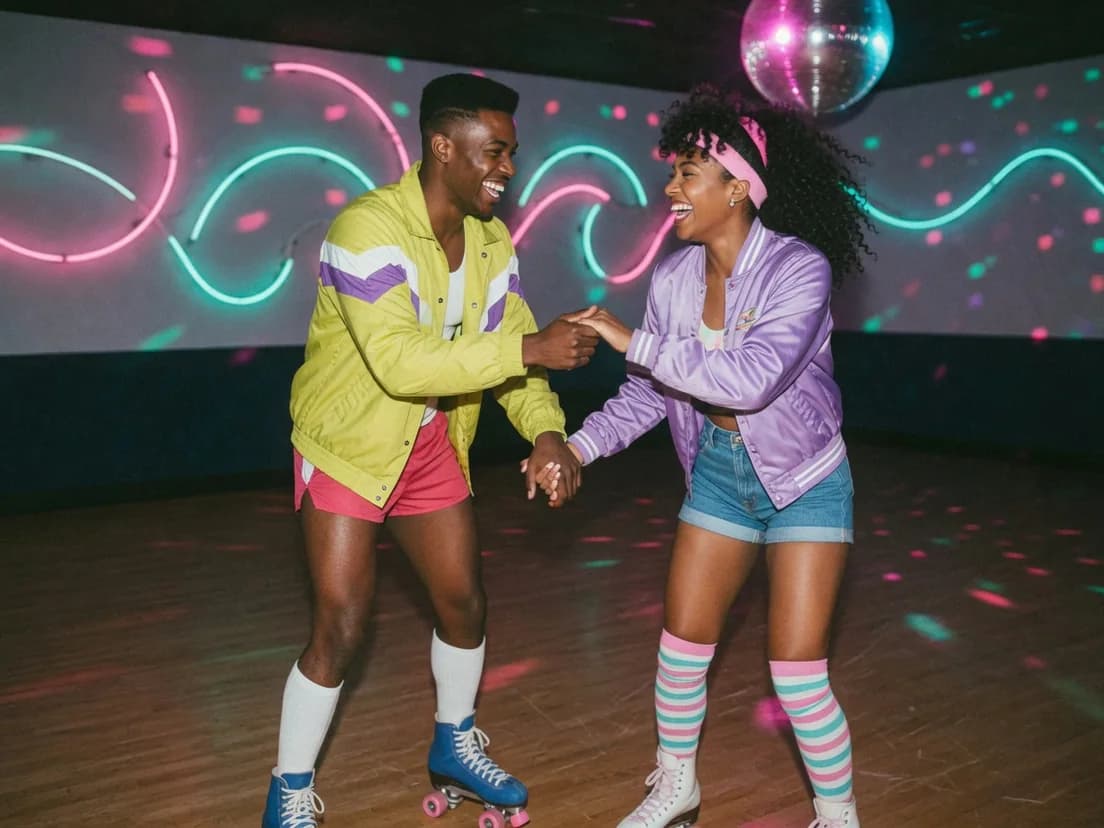
Roller rink
Neon pink and teal, skates, and a satin jacket. The loudest of the 80s drafts, and an easy read on a party invite.
Tip: Even light on both selfies keeps faces from fighting the neon.
Retro 80s & 90s couple photos
Upload one clear selfie each, pick 80s Retro or 90s Retro, and review the draft. The scene supplies the clothes and the light. You do not write a prompt.
2 free credits on signup · credits never expire
Upload one selfie of each partner and pick a scene. An 80s or 90s couple photo here means direct flash, a little grain, and period clothes, built around the two faces you upload.
80s Retro is saturated flash, big hair, and neon. 90s Retro is warmer disposable-camera color and denim. They are two scenes, not one slider, and both start from the same two faces.
The image is AI-made, not a real old negative and not a record of a night you had. Use it for a party invite, an anniversary card, or a keepsake, and say it is AI-made if someone could take it for a genuine photo.
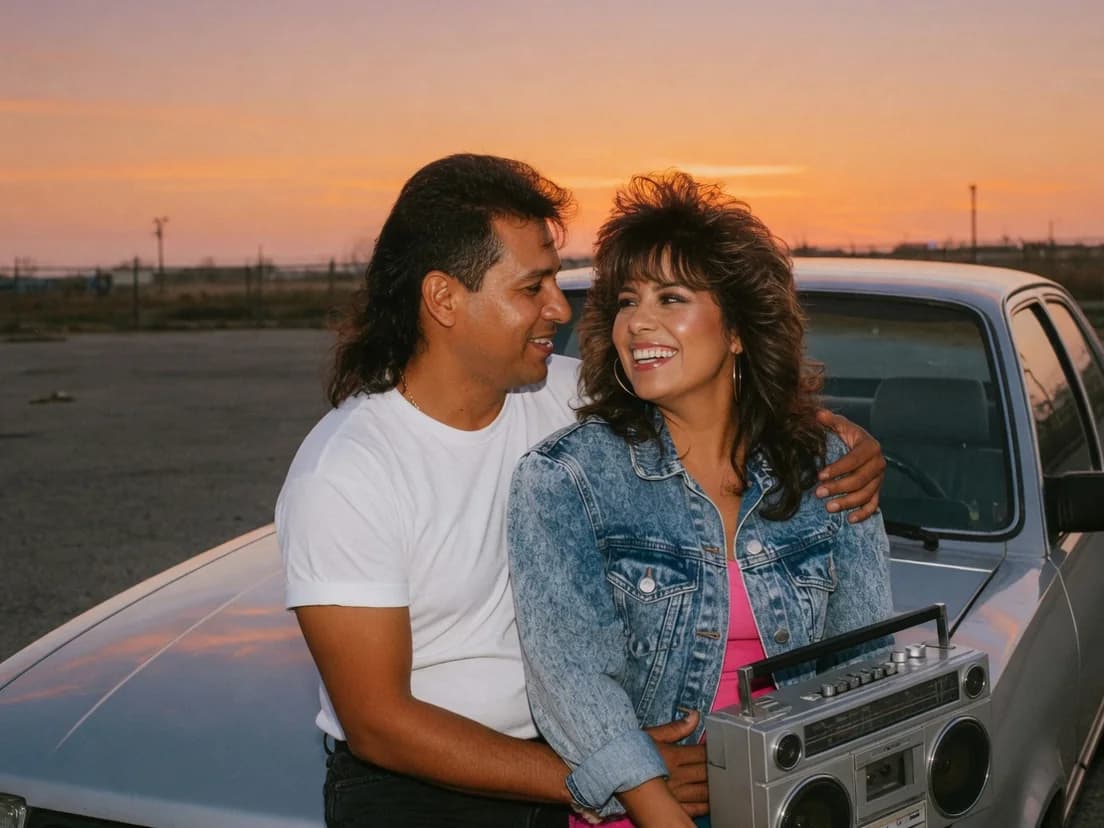
80s Retro is on-camera flash, visible film grain, and bold color. Hair gets volume. Outfits lean toward satin jackets, shoulder pads, and acid-wash denim. Light often picks up neon pink and teal, as at a roller rink or an arcade.
A draft might put you on skates, at an arcade cabinet, on the hood of a boxy car with a boombox, or under a balloon arch in prom clothes. You pick the decade. You do not pick the exact outfit, song, or address.
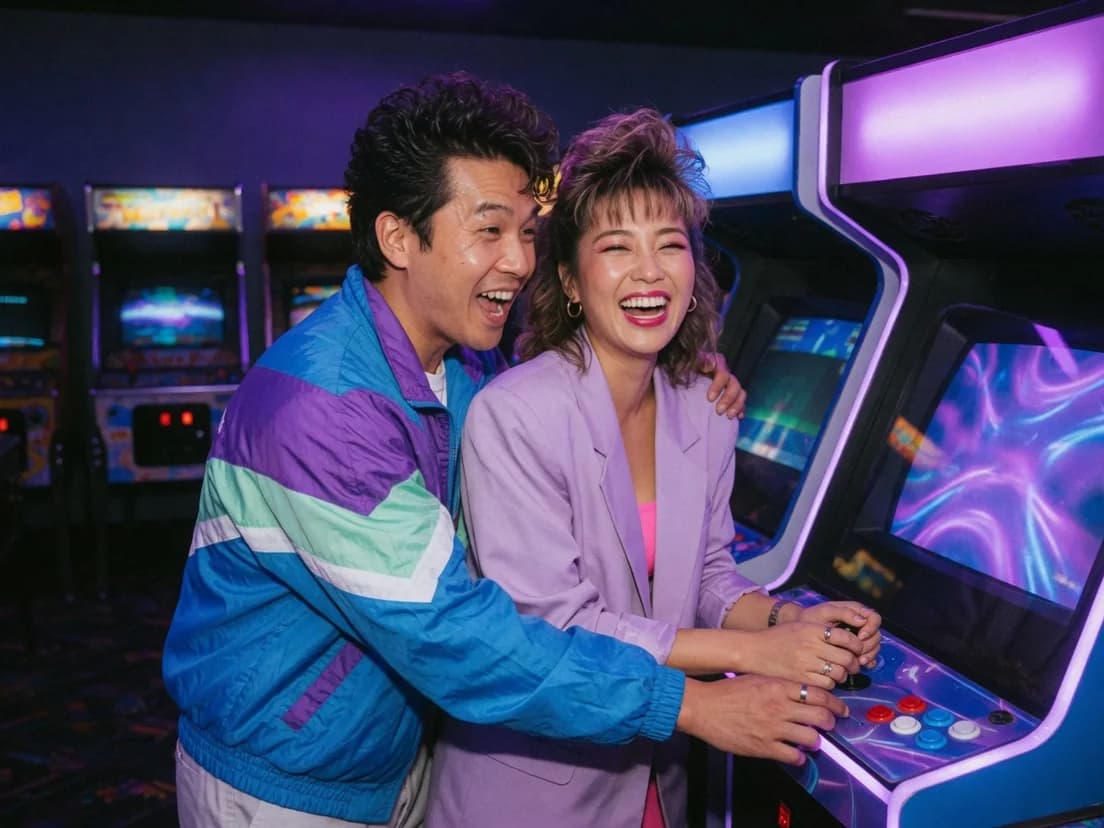
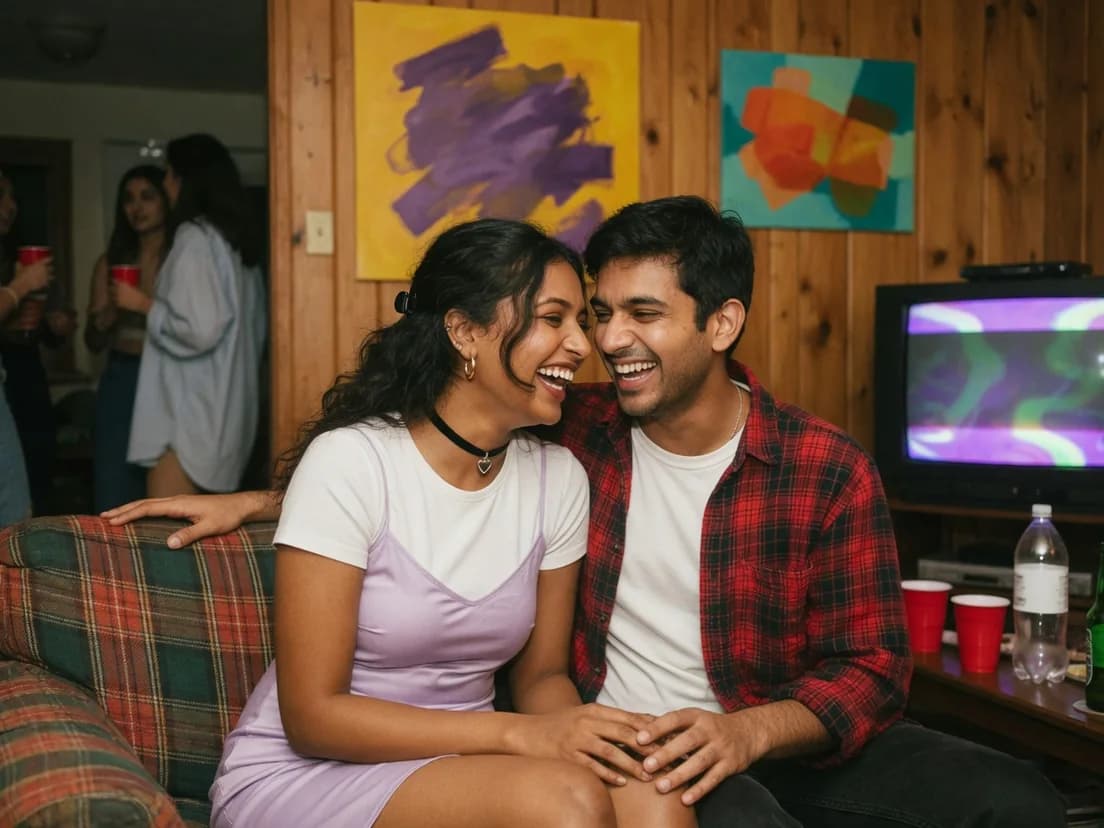
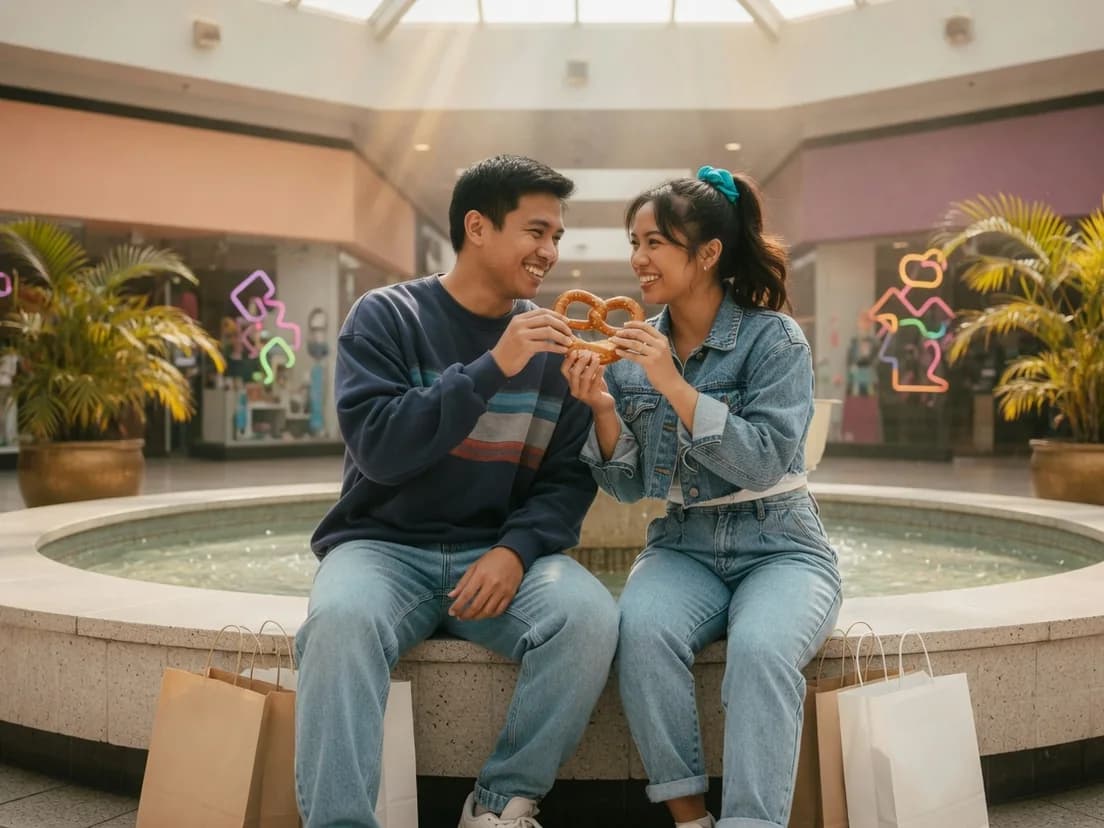
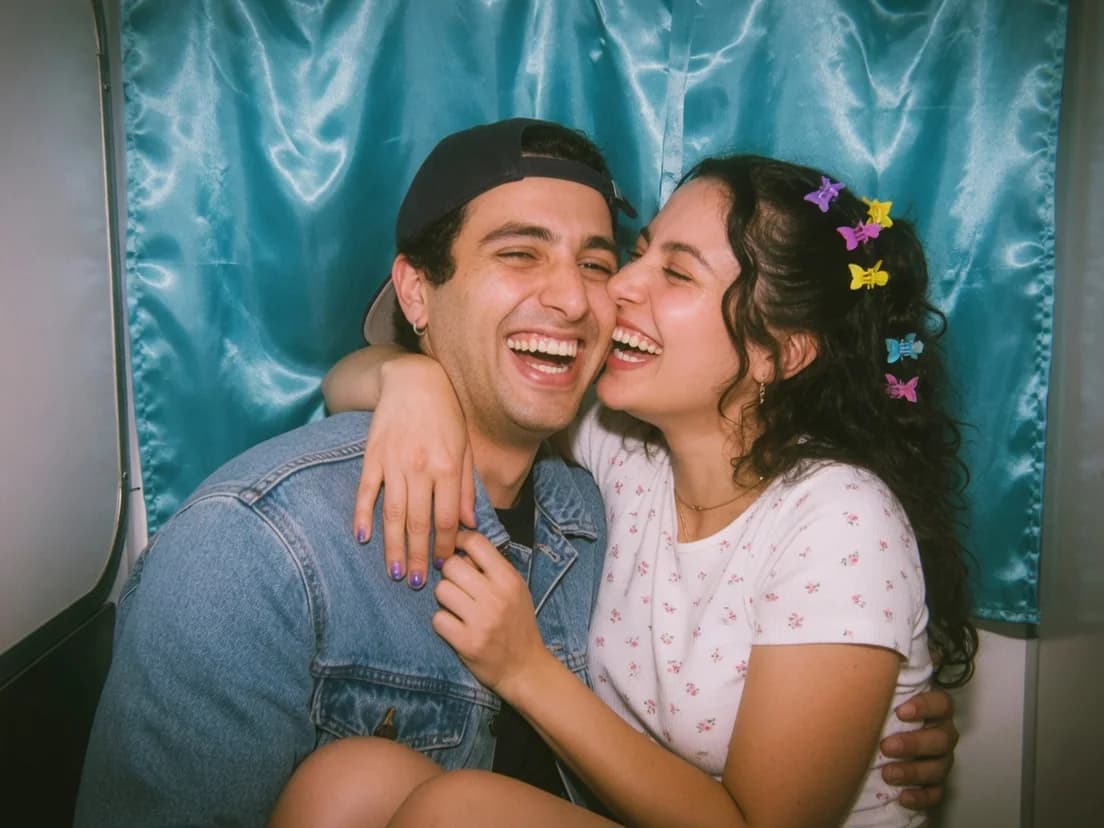
90s Retro is the disposable-camera version. Direct flash, warm faded color, soft grain. Clothes are casual: denim, flannel, baggy jeans, a slip dress over a tee, a scrunchie, butterfly clips, a backward cap. The places are ordinary on purpose.
Drafts land at a house party, a mall fountain, a photo booth, or a pickup at a desert overlook. The mood is candid. The styling comes from the scene. Your selfies only need clear faces.
Create an 80s or 90s couple portrait on CoupleFrame from one selfie of each partner and a curated retro scene, without writing a prompt.
Use a recent, front-facing photo of each of you, evenly lit, full face visible. Everyday clothes are fine. Skip sunglasses, heavy filters, and group shots.
Pick the decade that matches the frame you want. 80s Retro is neon flash and big hair. 90s Retro is disposable-camera color and casual clothes. There is no prompt box.
Each draft costs 1 credit and can land on a different pose. When one feels like you, unlock HD for 1 more credit. If a face looks off, try a clearer selfie or another draft.
Four 80s frames, then four 90s frames. Each sample is a different fictional adult couple.
Illustrative AI images of fictional adult couples, not customer selfies. Your result depends on the photos you upload.
You do not type these as prompts. They are moods the scenes tend to produce, with a tip for the selfies you start from.
Neon pink and teal, skates, and a satin jacket. The loudest of the 80s drafts, and an easy read on a party invite.
Tip: Even light on both selfies keeps faces from fighting the neon.
Both at the controls, laughing under screen glow. A dusk boombox shot is the quieter 80s cousin.
Tip: Front-facing selfies still work. The scene supplies the lean toward the machine.
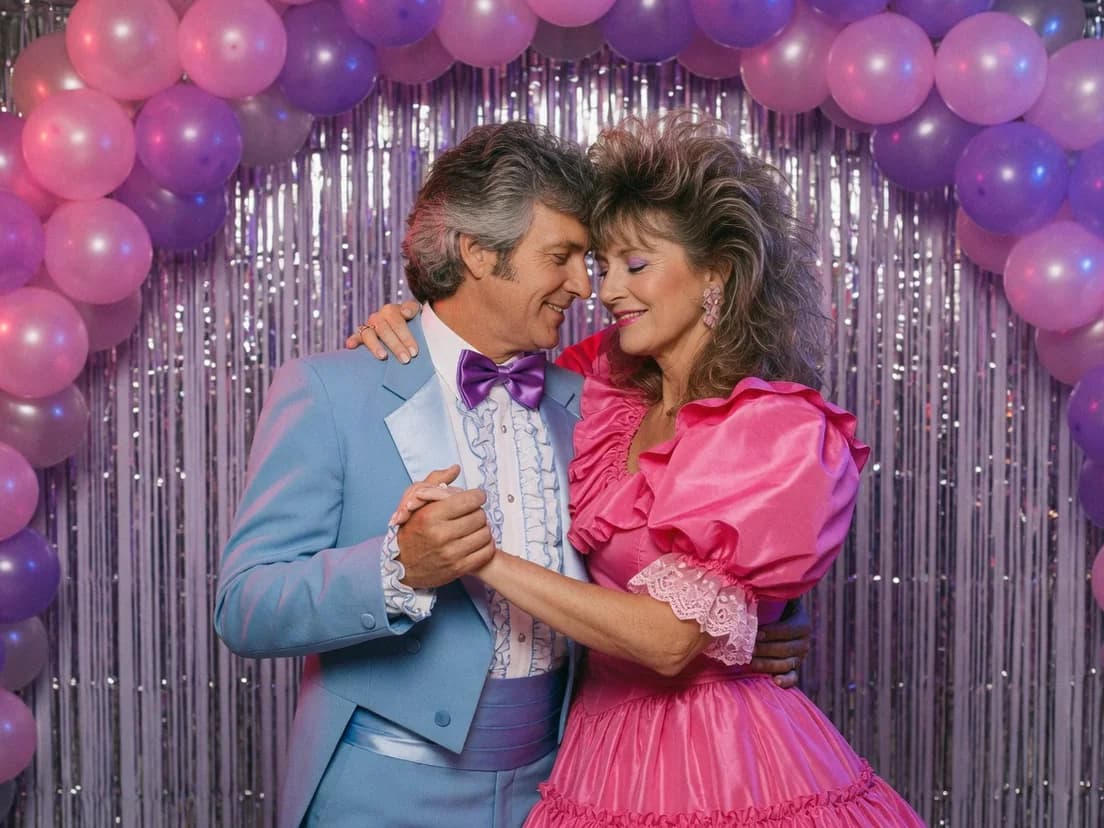
Taffeta, a pale tux, and a balloon arch. A themed-party picture, including for couples who were not at a prom in the 80s.
Tip: A calm, uncropped face in the selfie suits a slow dance.
A tight 90s frame: flash, cheek to cheek, clips and a backward cap.
Tip: Both eyes need to be visible. The booth crop leaves little room to hide a face.
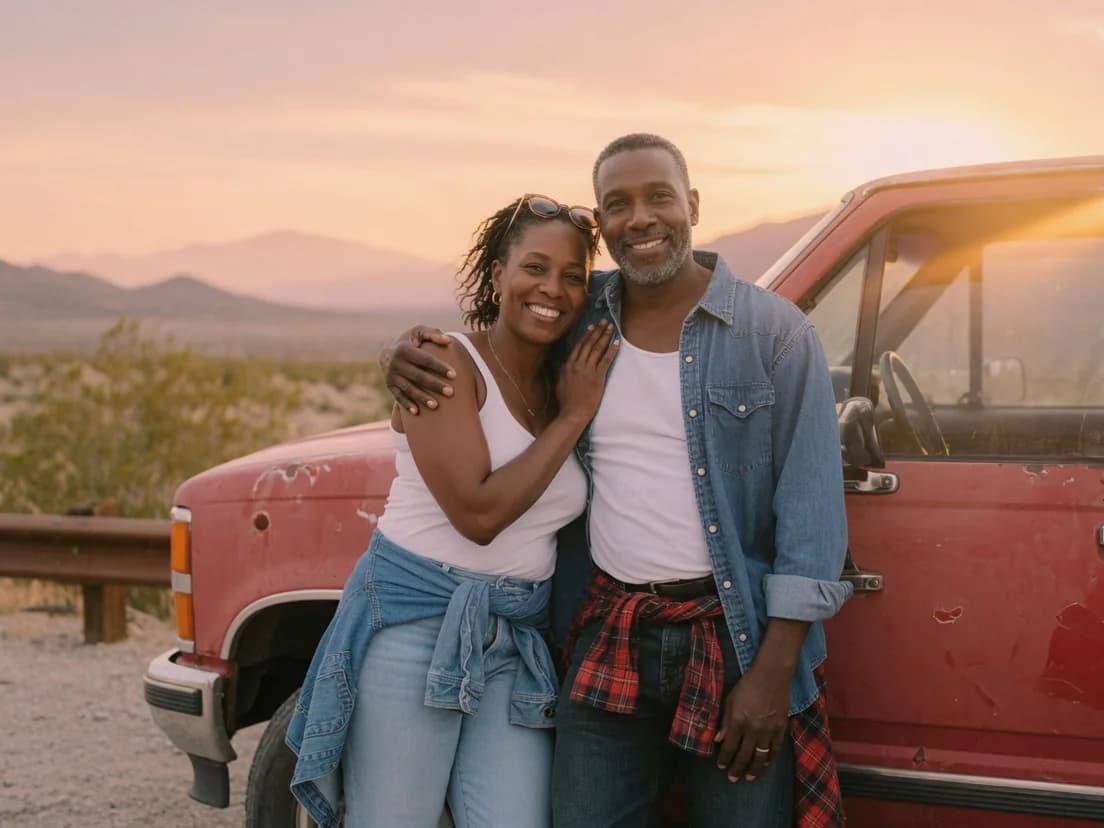
Denim on denim, a 90s pickup, and golden hour at an overlook. Warmer than the mall or the house party.
Tip: Selfies taken in soft daylight tend to sit naturally in warm golden-hour light.
Which decade to pick, which selfies help, what the image is good for, and what a retro scene cannot do.
Choose 80s Retro for neon, volume, and louder color: rink lights, an arcade, prom satin. Choose 90s Retro for something more casual: denim, a couch, a mall, a photo booth, a truck at sunset. If you are unsure, make one draft of each. They are separate scenes, so the poses will not match. Neither scene is a year, song, or movie control.
The scene supplies the styling. You do not need retro outfits, big hair, or a scrunchie in the selfie. You need a clear, recent, front-facing face in even light. One photo of each partner is enough, even from different days. A photo of you already together is optional.
Use a frame on an 80s invite, a 90s party graphic, or an anniversary card about how you might have looked if you had met in another decade. That is a keepsake idea, not a claim that the night happened. Long-distance partners can each send a selfie. You do not have to be in the same city. Print small: a card, a lock screen, a place card.
It cannot guarantee a jacket, a lyric, a real place, or the same pose twice. Results vary, and hands or hair can look odd. A dark or filtered selfie can make a face less like you. Grain and flash are a style applied now, not a photograph from that decade. Do not present the file as proof of a party or a year. For an exact outfit or place, use a prompt tool, or take a real photo.
Both can start from photos of the two of you and aim at an 80s or 90s look. They ask for different work and give you different control.
CoupleFrame retro scene. One selfie of each partner, then 80s Retro or 90s Retro. No prompt to write.
Prompt in ChatGPT or Gemini. Photos of each partner, or one photo of you together, plus wording for the decade, place, and pose.
CoupleFrame retro scene. The scene is already tuned: flash, grain, period clothes, and a setting such as a rink, an arcade, a mall, or a photo booth.
Prompt in ChatGPT or Gemini. You describe the look and revise the wording when a draft misses. Any decade or costume you can describe is available.
CoupleFrame retro scene. Each partner's selfie is the starting point. How close the result stays still varies with the photos, the light, and the draft. It is not an identical likeness.
Prompt in ChatGPT or Gemini. You upload photos and describe the look. How closely faces are kept depends on the photos, the wording, and the tool, and often takes several tries. Faces can drift or blend.
CoupleFrame retro scene. Two curated retro looks. You cannot set a year, a song, a movie still, or an exact outfit.
Prompt in ChatGPT or Gemini. Far more flexible: any decade, outfit, or pose you can describe, including formats that are not a CoupleFrame scene.
CoupleFrame retro scene. You want an 80s or 90s photo without writing a prompt, and you will review a draft inside that look.
Prompt in ChatGPT or Gemini. You want to direct the details, or you want a format that is not one of the two scenes, and you are ready to retry.
If you want copy-paste wording for ChatGPT or Gemini, including a shoulder-peek selfie CoupleFrame does not offer as a scene, the trending couple photo prompts guide on the blog walks through it. A retro scene here stays the two curated looks.
Make an AI Valentine's couple photo from two selfies: candlelit dinners, red roses, rooftop lights, or cozy nights in. A card, post, or surprise in minutes.
Create a beach sunset couple photo from two selfies. Choose the seaside scene, review a new portrait, and keep a warm shoreline look without a beach shoot.
Create an AI anniversary photo from two selfies: candlelit dinner, Paris, or cozy café scenes for a card, surprise, or lock screen. Free credits to start.
Copy-paste 80s, 90s, and shoulder-peek prompts for ChatGPT or Gemini, and when a curated scene is the simpler path.
Beach, Paris, café, wedding, Valentine's, and the rest of the curated looks, still with no prompt to write.
One-time credit packs. A draft and an HD unlock are separate credits, and credits do not expire.
Two selfies, one curated decade, a draft you can actually review. The scene brings the flash and the clothes. You do not write a prompt.
Outputs are AI-generated images, not authentic photographs of real events.